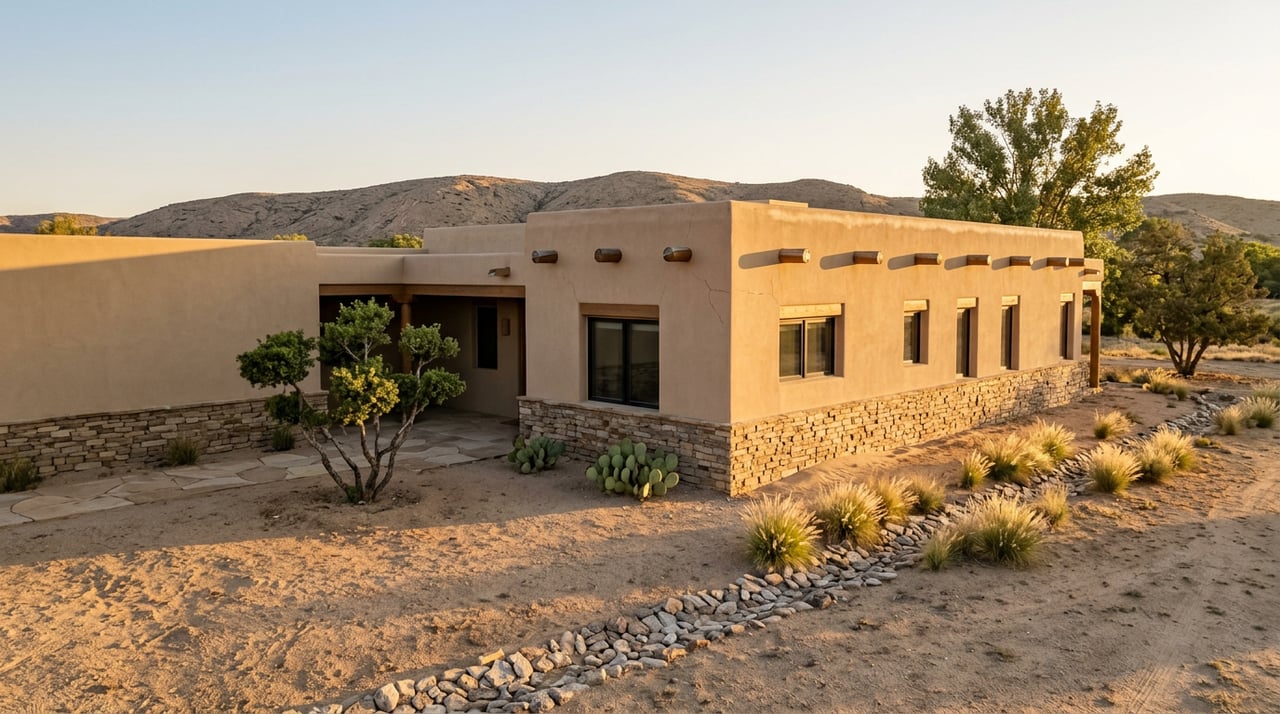
You find the listing on a Tuesday. Just under an acre, mountain views out the back, the kind of quiet that only exists once you're a few streets off Paseo del Norte. The comps look reasonable. Your agent mentions the well and septic almost in passing, the way you'd mention that a house has a gas range instead of electric. It sounds like a footnote.
It isn't. In North Albuquerque Acres, the well and the septic system aren't two separate line items on an inspection checklist. They're one location problem, and the county already had opinions about where that problem could go before you ever toured the house.
Two systems sharing one small footprint
Most homes in North Albuquerque Acres sit outside the city's water and sewer service area, which means a private well handles the water coming in and a septic system handles the wastewater going out. That's normal for the neighborhood and has been since the lots were platted. What's less obvious is how little room those two systems leave each other on a typical parcel.
Septic leach fields have to sit a required distance from any water well, including a neighbor's well if one is close enough to matter. On a flat, rectangular half-acre in a standard subdivision, that setback is easy to satisfy. On a sloped foothills lot with a well pad tucked against one property line and a septic field needing its own patch of workable soil, the math gets tighter fast. That helps explain why the acreage on the listing sheet and the acreage you can actually build on are two different numbers.
The arroyo was already decided for you
North Albuquerque Acres was platted in the 1920s and 1930s as individual lots, and the natural arroyos that cut through the foothills were left largely untouched. That was a feature then. Today it's also a regulatory fact you inherit with the property.
Since the early 1990s, the Albuquerque Metropolitan Arroyo Flood Control Authority, known locally as AMAFCA, has required individual Grading and Drainage Plans before development can move forward on these lots. Where an arroyo crosses a property, AMAFCA's drainage policy calls for the floodplain right-of-way to be dedicated to flood control use, and the ordinance language is direct about the terms: dedicated land is handed over "without compensation as a condition of approval." That easement doesn't show up as a line item on a listing. It shows up when you or a future owner tries to site a new leach field, add a casita, or extend a driveway and discovers that a chunk of the "usable" acreage was never really available.
The North Albuquerque Acres Community Association, a resident run group that tracks drainage, zoning, and road conditions across the neighborhood, exists in large part because these AMAFCA and county drainage questions come up often enough to need a standing point of contact.
The inspection that shows up at the worst possible time
According to Ida Kelly, Bernalillo County requires a septic system to be inspected and evaluated before a property transfers ownership. That sounds like standard due diligence until you notice when it typically happens in practice: after an offer is accepted, once the property is already under contract, when everyone involved has momentum they don't want to lose.
If the system fails at that point, the timeline gets complicated. Repair costs become something buyer and seller negotiate in real time, with financing deadlines and moving trucks already in motion.
Here's what that timing difference actually looks like for the two sides of a transaction:
Septic inspected before listing | Septic inspected after offer | |
|---|---|---|
Who controls the timeline | Seller, on their own schedule | Whoever's clock is already running on the contract |
Repair costs | Planned, can be priced into the listing | Negotiated under deadline pressure |
Buyer confidence | Clean report becomes a selling point | Any hesitation reads as a red flag mid-contract |
Worst case | Fix it quietly, relist when ready | Deal delay, credit negotiation, or a failed closing |
The inspection is going to happen either way. The only real choice is who's holding the calendar when it does.
What the deed acreage doesn't tell you
Put the two pieces together and the actual claim here comes into focus. A lot listed at 0.9 acres in North Albuquerque Acres isn't automatically 0.9 usable acres. Subtract whatever AMAFCA's floodplain easement claims along an arroyo. Subtract the buffer the septic field needs from the well, and from any well next door. Factor in slope, because foothills terrain here runs coarser and drains differently than the finer, more compaction prone decomposed granite common on the mesas below, which affects where a leach field will actually perform. What's left is the number that matters for building, expanding, or replacing a failed system, and it's frequently smaller than the number on the plat map.
This is the gap that catches people. Buyers price the lot they see. Sellers list the acreage on record. The county, meanwhile, has already drawn lines across both of those numbers that neither party notices until someone tries to build something.
If you're selling
Order the septic inspection before you list, not after you accept an offer. A clean report becomes something you can point to with confidence. A problem found early is a repair you control. A problem found under contract is a negotiation you don't.
It's also worth checking your property's AMAFCA drainage status ahead of time, particularly if an arroyo runs through or near the lot. Knowing whether a Grading and Drainage Plan is on file, and what easements it created, means you can answer a buyer's question the day it's asked instead of days later.
If you're buying
Get the well tested for water quality, not just flow rate. New Mexico's groundwater carries naturally occurring arsenic at levels the state environment department flags as a real concern for private well owners, and unlike a municipal water system, nobody is testing your well for you on a schedule. A basic panel covering arsenic, nitrates, and bacteria is inexpensive relative to what a treatment system costs to add later.
Ask for the septic system's inspection and permit history, and confirm where the leach field sits relative to the well and any AMAFCA easement on the property. If the seller hasn't had it inspected yet, ask when they plan to and whether the timeline lines up with yours.
A short list of questions worth asking before you write an offer:
- When was the septic system last inspected, and did it pass without conditions?
- Has this property ever had a Grading and Drainage Plan filed with AMAFCA, and does an arroyo easement run through it?
- What's the well's tested flow rate, and has the water been tested for arsenic and nitrates in the last year?
- Is there documentation showing the leach field's distance from the well and from any neighboring wells?
- If the septic system needs replacement, is there confirmed usable space on the lot for it?
FAQ
Does every home in North Albuquerque Acres use a well and septic system? Most do, since the majority of the neighborhood sits outside the city's municipal water and sewer service area, though a handful of lots closer to service lines may differ. Confirm the specific setup for any property you're considering rather than assuming.
If a septic system passes inspection, is that permanent? No. A passing inspection reflects the system's condition at that point in time. Age, usage, and soil conditions all affect how long it continues to perform well, which is part of why a fresh inspection matters even if a system passed a few years earlier.
Can I request city water or sewer service instead of a well and septic? That depends on how close the property is to existing municipal lines and involves its own connection costs and approval process. It's a conversation worth having with the county and the water utility early, not something to assume is simple or inexpensive.
What does the North Albuquerque Acres Community Association actually do? NAACA is a resident run association that follows zoning, drainage, and road issues across the neighborhood and works with county and city offices on the community's behalf. It's a useful resource if you want context on how a specific drainage or development question has played out locally.
North Albuquerque Acres rewards people who ask the right questions early, and punishes the ones who wait until they're under contract to ask them. If you're weighing a lot here, whether you're buying your first acre or getting ready to list one you've lived on for years, I'd rather walk the property with you and talk through what the setbacks and easements actually mean for your plans before you're locked into a timeline. Reach out to House of Homes NM and let's talk about your next move.
This article is general information, not legal, tax or financial advice. Consult a qualified professional about your situation.